
Standby Generator vs. Portable Generator
Compare automatic standby and portable generators to decide what level of backup power makes sense for your home.
When a power outage hits, homeowners with backup power face far fewer disruptions than those without. But not all backup power solutions are equal. Understanding the difference between a portable generator and an automatic standby generator helps you choose the right level of protection for your home, your budget, and your lifestyle.
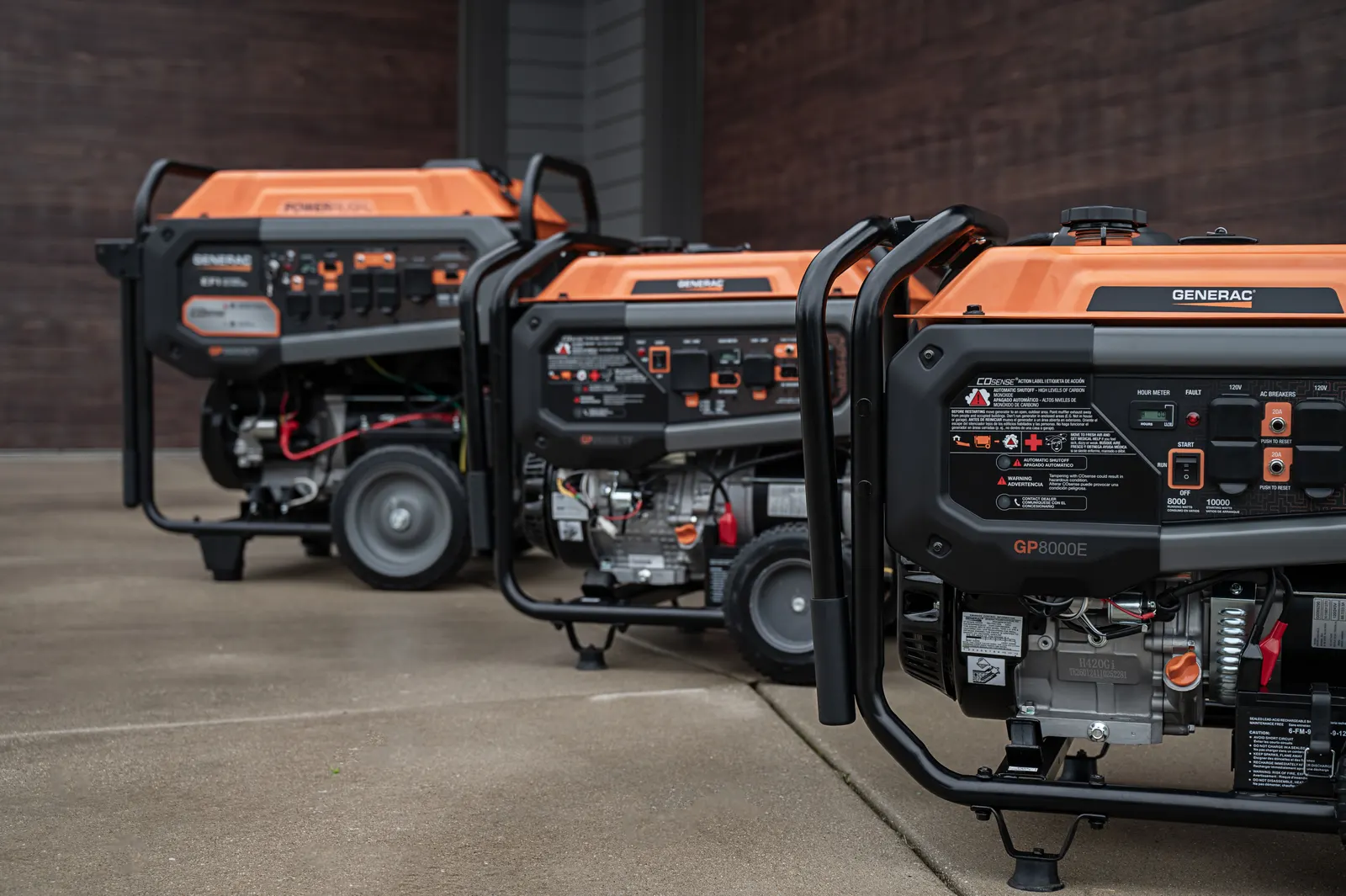
Portable Generators
Portable generators are gasoline-powered units that must be manually started, positioned outdoors, and connected to appliances via extension cords or a manual transfer switch. They range from small 2,000-watt units to larger 10,000-watt models.
- ▸Lower upfront cost. Portable generators typically cost between $400 and $2,000 depending on wattage.
- ▸Manual operation required. You must go outside, add fuel, start the unit, and run extension cords — often in the middle of a storm at night.
- ▸Fuel storage and availability. Gasoline must be stored safely and may be unavailable during widespread outages when gas stations lose power.
- ▸Limited capacity. Most portable generators can power only a few circuits — not your whole home.
- ▸Carbon monoxide risk. Must be operated at least 20 feet from any window, door, or vent. Never run indoors or in a garage.
Automatic Standby Generators
A standby generator is permanently installed outside your home, connected to your natural gas or propane supply, and wired to your electrical panel through an automatic transfer switch. When utility power fails, the generator starts automatically — typically within 10 to 30 seconds — and shuts off automatically when power is restored.
- ▸Fully automatic. No manual intervention required. The generator starts whether you are home, asleep, or away.
- ▸Natural gas or propane fuel. Connected to your existing utility line — no fuel storage, no trips to the gas station.
- ▸Whole-home or essential-circuit coverage. Properly sized standby generators can power your entire home, including HVAC, sump pump, well pump, refrigerator, and medical equipment.
- ▸Higher upfront investment. Installed cost varies based on generator size, fuel type, transfer switch, and site conditions. Request a site-specific quote for accurate pricing.
- ▸Long-term reliability. With regular maintenance, a standby generator can provide decades of service.
Which Is Right for You?
A portable generator may be sufficient if you only need to power a few appliances occasionally and are comfortable with manual operation. A standby generator is the better choice if you have a sump pump, a well pump, medical equipment, a home office, or simply want protection that works automatically without any action on your part.
For most Northeast Ohio homeowners, the combination of frequent lake-effect storms, aging grid infrastructure, and the risk of basement flooding makes an automatic standby generator the more practical long-term investment.