
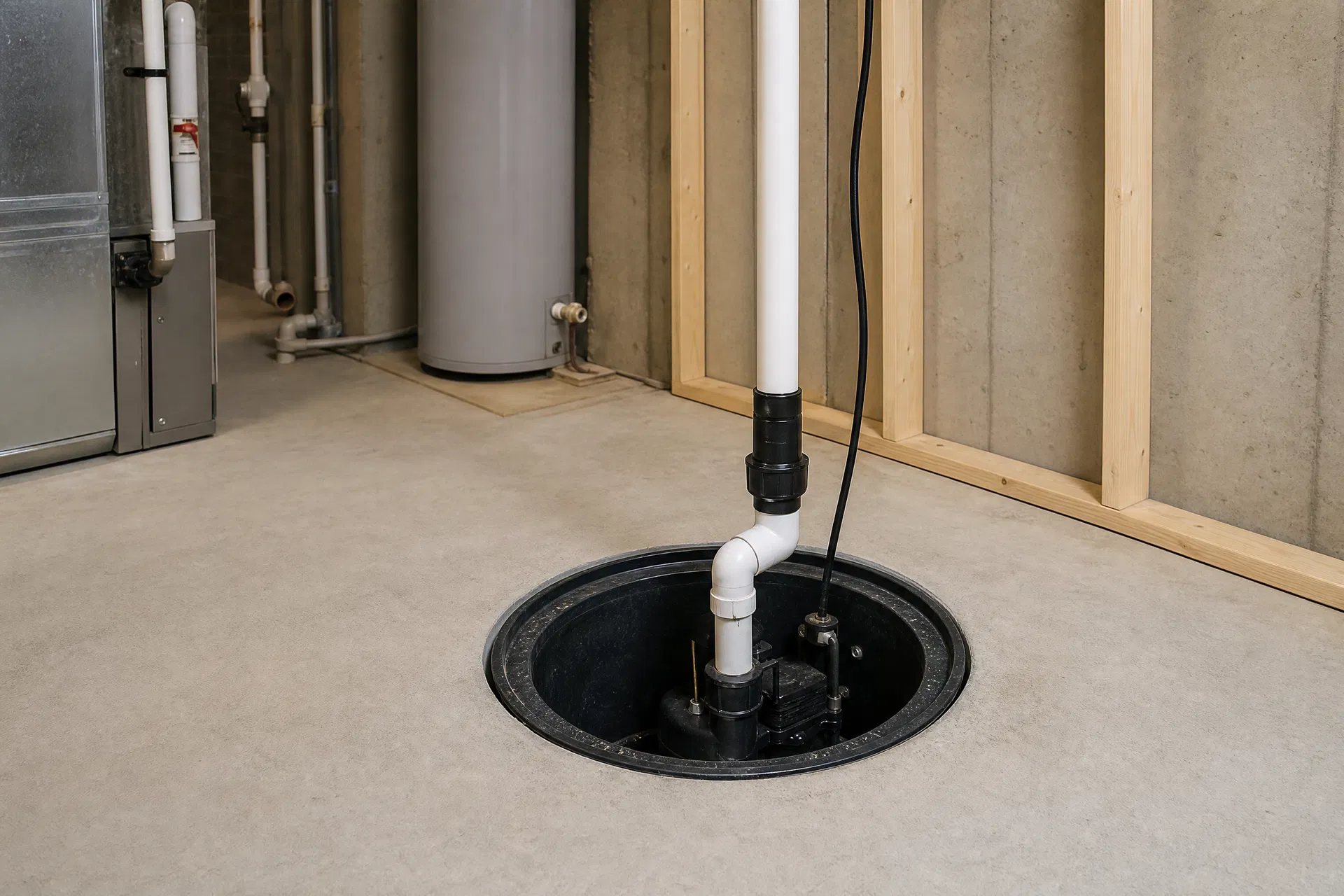
Keep Your Sump Pump Running During a Power Outage
Compare battery backups, portable generators, and standby generators for sump pump protection during Northeast Ohio storms.
In Northeast Ohio, power outages and heavy rain often arrive together. That combination is the leading cause of basement flooding. When your sump pump loses power during a storm, water can enter your basement within minutes. This guide explains your options for keeping your sump pump running when the grid goes down.
Why Sump Pump Protection Matters
Northeast Ohio's clay-heavy soil, high water tables, and frequent thunderstorms create conditions where basement flooding is a real and recurring risk. The Akron-Canton area, Medina County, and communities near the Cuyahoga River and its tributaries are especially vulnerable. A single basement flood can cause $10,000 to $30,000 in damage — far more than the cost of a backup power solution.
The problem is that the storms most likely to cause flooding are the same storms most likely to knock out power. Your primary sump pump runs on utility power. When that power fails, the pump stops — and water rises.
Option 1: Battery Backup Sump Pump
A battery backup sump pump is a secondary pump that activates when your primary pump fails — whether due to a power outage, a burned-out motor, or a float switch failure. It runs on a 12-volt marine battery that is continuously charged by a trickle charger connected to your home's power.
- ▸Pros: Lower cost ($200–$600 installed), works immediately, protects against pump failure as well as power outages.
- ▸Cons: Limited run time (typically 5–10 hours of continuous pumping), reduced pumping capacity compared to primary pump, battery must be replaced every 3–5 years.
- ▸Best for: Homeowners who want a low-cost safety net for short outages and pump failures.
Option 2: Portable Generator
A portable generator can power your primary sump pump during an outage. A 1/2 HP sump pump draws approximately 800 to 1,050 watts, which is within the range of most portable generators.
- ▸Pros: Can power the sump pump plus other appliances, lower upfront cost than a standby generator.
- ▸Cons: Must be manually started and connected during the storm, requires fuel storage, cannot be run indoors or in a garage, may not be available if you are away from home.
- ▸Best for: Homeowners who are always home during storms and are comfortable with manual operation.
Option 3: Automatic Standby Generator
An automatic standby generator is the most comprehensive solution. It starts within seconds of a power outage — automatically, without any action on your part — and powers your sump pump continuously for as long as the outage lasts.
- ▸Pros: Fully automatic, unlimited run time on natural gas, powers sump pump plus furnace, refrigerator, lighting, and other critical systems simultaneously.
- ▸Cons: Higher upfront investment than battery backup or portable generator.
- ▸Best for: Homeowners who want complete protection without manual intervention, especially those with finished basements, high water tables, or frequent outages.