
Why Generators?
Everything you need to know about backup power. Make an informed decision for your home or business.
Power Security in an Uncertain World
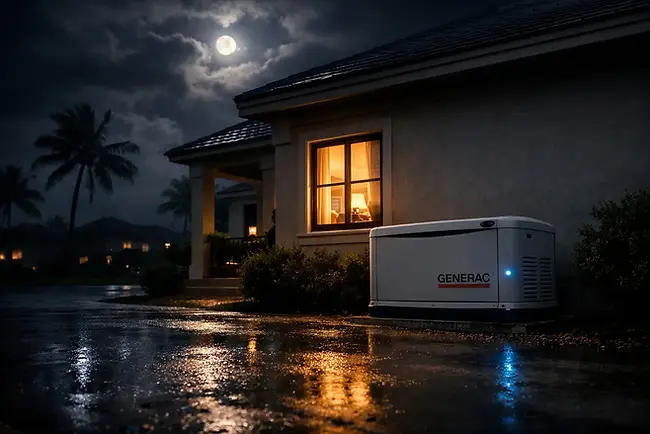
Power outages are becoming more frequent and lasting longer due to aging infrastructure and severe weather events. A standby generator isn't just a luxury—it's an investment in safety, comfort, and peace of mind.
Protection
Keep critical systems running: sump pumps, security systems, and medical equipment.

Comfort
Maintain heating/cooling, refrigeration, and lighting during extended outages.

Value
Increases home resale value and can lower insurance premiums in some cases.
The Technology
How Automatic Standby Generators Work
Unlike portable generators that require manual setup, refueling, and extension cords, a standby generator is permanently installed and operates automatically.
Power Loss Detected
Within seconds of an outage, the transfer switch senses the power loss.
Generator Starts
The generator automatically starts up and reaches operating speed.
Power Transferred
The transfer switch disconnects from the utility line and connects your home to the generator.
Utility Returns
When utility power is restored, the system automatically transfers back and shuts down the generator.

Sizing Your Generator
Choosing the right size (kW) is critical. Too small, and you can't run essentials. Too big, and you're wasting money on fuel and installation.
Essential Circuit Coverage (7.5kW - 10kW)
Powers only basics: lights, refrigerator, sump pump, microwave.
Managed Whole House (12kW - 16kW)
Powers most items, with load management for high-draw appliances like A/C.
True Whole House (20kW - 26kW+)
Powers everything in your home simultaneously with no compromises.
Fuel Types
Standby generators connect directly to your home's fuel supply, so you never have to refuel with gas cans.
Natural Gas (NG) Most Common
Unlimited fuel supply via underground lines. Clean burning and convenient.
Liquid Propane (LP) Rural Option
Stored in a tank on your property. Ideal for areas without natural gas service. Propane has a long shelf life.
Diesel Commercial/Industrial
Typically used for larger commercial applications requiring high power output and durability.